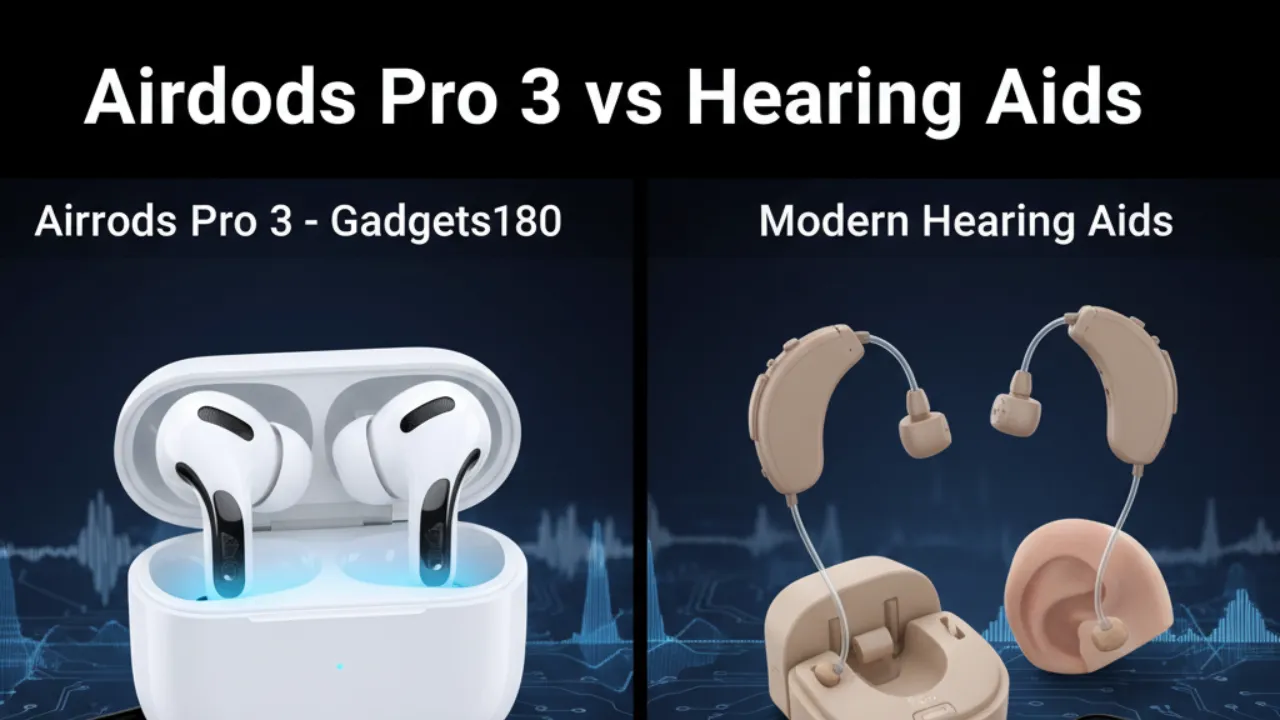
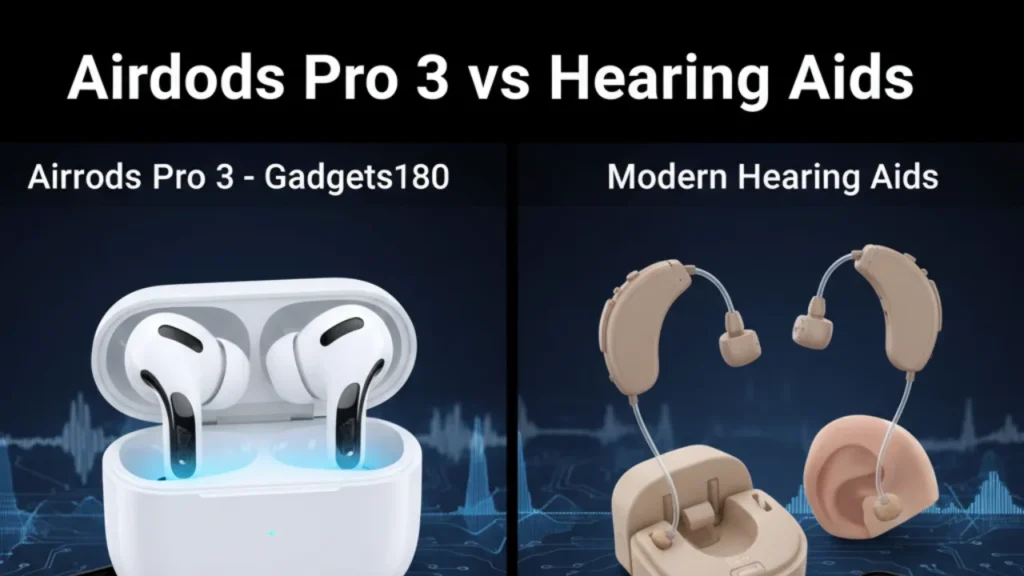
AirPods Pro 3 vs Hearing Aids: After years in war zones, a veteran’s hearing began to fade. His audiologist confirmed moderate high-frequency hearing loss — the kind that makes conversations harder to follow. When he saw the $7,000 price tag for traditional hearing aids, the diagnosis hit less hard than the cost. He eventually settled for $1,600 Jabra Enhance Pro 20s from Costco. But with Apple’s AirPods Pro 3, retailing at just $249, there’s a new contender promising affordable hearing assistance — and millions of Americans could benefit.
A Widespread but Untreated Issue
Nearly 50 million Americans experience some degree of hearing loss, yet only 16% of adults aged 20–69 who could benefit have ever used hearing aids. Untreated hearing loss has major consequences — from a 58% higher risk of unemployment to being the largest modifiable risk factor for dementia, according to the 2020 Lancet Commission.
Cost and stigma are the biggest barriers. Traditional hearing aids cost thousands, and many associate them with aging. That’s where Apple steps in.
Also read; Citizens Bank App Outage Leaves Customers Across the U.S. Unable to Access Accounts
FDA-Approved Over-the-Counter Solution
Since September 2024, the AirPods Pro 2 and 3 have been FDA-approved as over-the-counter hearing aids. Users can perform a 10-minute self-test or upload a professional audiogram to customize amplification. When tested against a clinical audiogram, Apple’s results were remarkably accurate — within 10dB of professional measurements, a difference experts say is “within normal test variation.”
Dr. David Zapala, president of the American Academy of Audiology, called Apple’s approach “pretty darn good… much better than earlier iterations.”
Sound Quality and Real-World Performance
Switching between professional and Apple-generated hearing profiles revealed only subtle differences. The AirPods made “s” and “k” sounds slightly duller, but overall speech clarity was strong.
However, the Jabra Enhance Pro 20s delivered a more natural “acoustic transparency,” while the AirPods offered what the tester described as “amplified reality” — crisp but slightly artificial.
In noisy environments, the Jabras outperformed, handling crowded restaurants better. The AirPods sometimes amplified the wrong voice or mixed conversations into “audio soup.”
When it came to music, the AirPods won hands down — offering rich, balanced audio that traditional hearing aids can’t match.
Battery Life and Comfort
Battery life remains a major drawback for Apple’s buds. The AirPods Pro 3 last about 10 hours per charge versus 24–30 hours for the Jabras. While Apple’s quick charging case adds convenience, it’s not ideal for all-day use.
The occlusion effect — that echoing, muffled feeling when your ear canal is blocked — was also more noticeable in AirPods. Jabras, which leave the ear more open, sound more natural.
Support and Cost
The Jabras come with three years of professional adjustments and cleanings, while the AirPods offer none. Apple’s system relies entirely on software algorithms and user calibration.
Still, at $249, the AirPods Pro 3 cost a fraction of professional hearing aids — a potential game-changer for those hesitant to seek help.
Who Should Use Which?
Consider AirPods Pro 3 if you:
- Have mild to moderate hearing loss
- Need situational hearing assistance (meetings, restaurants)
- Already use an iPhone or AirPods
- Want to try hearing aids before investing in expensive models
Stick with traditional hearing aids if you:
- Have moderate to severe hearing loss
- Need all-day battery life
- Can afford professional fitting and ongoing care
Bottom Line
Apple’s AirPods Pro 3 don’t fully replace medical-grade hearing aids — but they’re closing the gap. For the millions of people priced out or put off by stigma, they could be the first step toward hearing better again.
Comment on “AirPods Pro 3 vs Hearing Aids: Can Apple’s $249 Earbuds Really Replace $7,000 Devices?”