
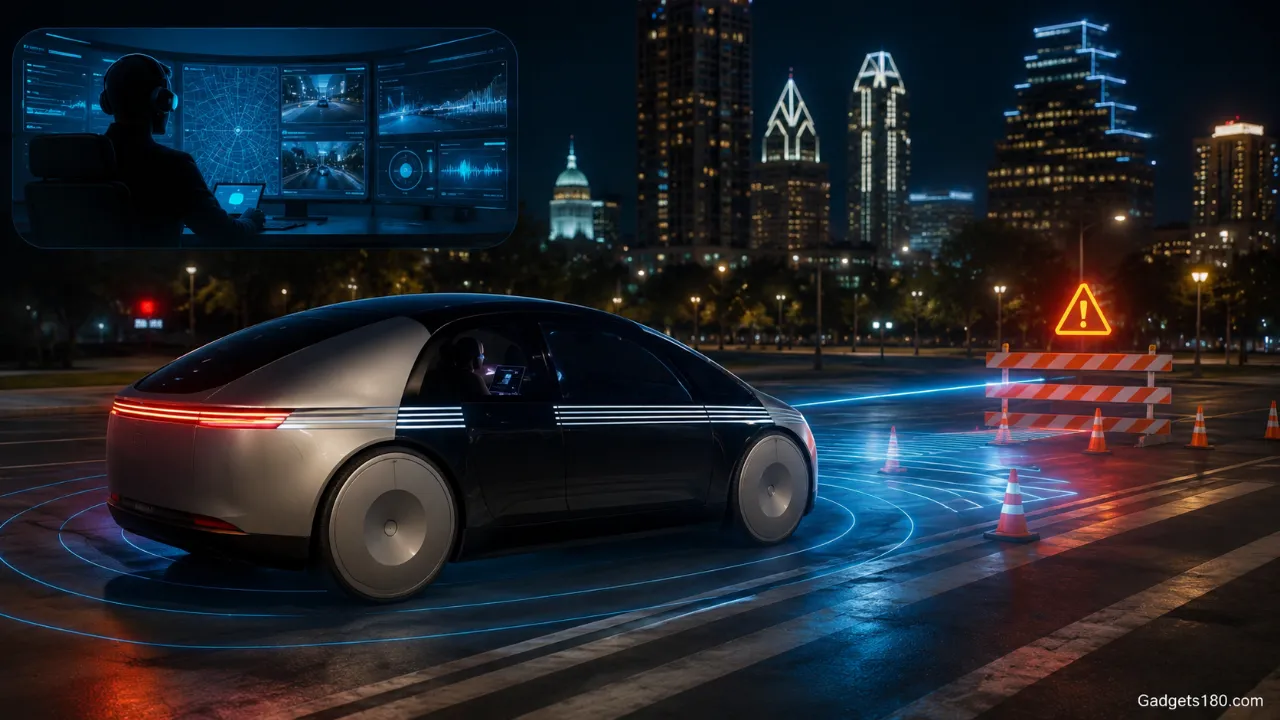
Tesla Robotaxi: Tesla has disclosed new details about crashes involving its early Robotaxi service in Austin, Texas. According to newly unredacted information submitted to the National Highway Traffic Safety Administration, Tesla Robotaxis were involved in at least two crashes while being remotely driven by teleoperators.
Both crashes happened at low speeds. In each case, a safety monitor was sitting behind the wheel, and no passengers were inside the vehicle.
The new information gives a closer look at how Tesla’s system works during early testing and why the company appears to be expanding the service carefully.
What Happened?
Tesla’s newly unredacted crash reports show that two new taxi crashes happened while remote operators were controlling the vehicles.
The first crash happened in July 2025, shortly after Tesla began operating its Robotaxi network in Austin. The vehicle’s automated driving system appeared to have trouble moving forward while stopped on a street. The safety monitor requested help from Tesla’s remote assistance team. A teleoperator then took control, turned the vehicle left, drove up a curb, and hit a metal fence.
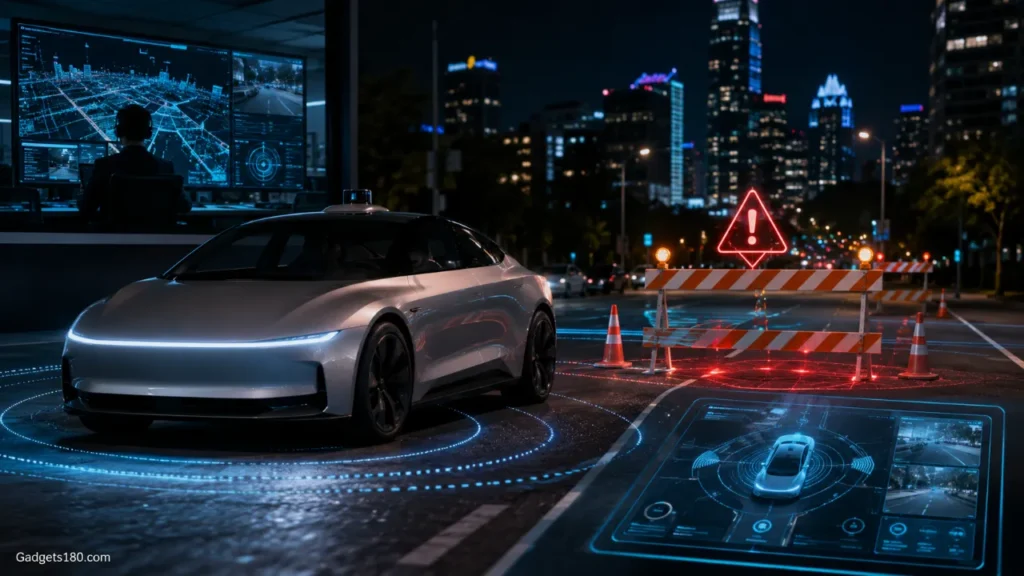
The second crash happened in January 2026. In that case, the automated system was driving straight before the safety monitor asked for support with navigation. A teleoperator took control while the vehicle was stopped and drove forward. The vehicle then hit a temporary construction barricade at about 9 mph, scraping the front-left fender and tire.
What Is a Tesla Robotaxi?
A Tesla Robotaxi is part of Tesla’s plan to build an autonomous ride-hailing network. The idea is that Tesla vehicles can eventually drive passengers without a human driver.
However, Tesla’s current Robotaxi operations are still in an early stage. The reported crashes involved safety monitors inside the vehicles, which means Tesla is not yet operating the service as a fully driverless system in these cases.
This is important because it shows that Tesla is still using human oversight while testing and improving the system.
What Are Teleoperators?
Teleoperators are remote human operators who can help control a vehicle from a distance.
Tesla has said remote operators may pilot a vehicle when it needs to move out of a difficult or unsafe position, as long as the vehicle remains under 10 mph. The company previously told lawmakers that this capability can help move a vehicle quickly instead of waiting for a first responder or Tesla field representative.
In simple words, a teleoperator is like a remote backup driver. They are not physically inside the car, but they can help the vehicle move when the automated system or safety monitor needs assistance.
Why These Crashes Matter
The crashes matter because they raise questions about how safe and reliable remote vehicle control is during real-world robotaxi testing.
Autonomous vehicles already face many challenges on public roads. Construction zones, curbs, temporary barricades, parked vehicles, pedestrians, animals, and unusual road layouts can all create problems.
When a teleoperator takes over, the system also depends on remote control quality, camera views, connection reliability, and the operator’s judgment. Even at low speeds, mistakes can still lead to crashes.
Also read;
Instagram Instants- What It Is, How It Works and How to Turn It Off
Who Decides What AI Tells You? Campbell Brown Says Accuracy Needs More Attention
Apple iOS 26.5 Update- Latest Features, Release Date and How to Install on Your iPhone
Tesla Reported 17 Robotaxi Crashes
Tesla’s latest NHTSA data included narrative descriptions for 17 crashes recorded since last year involving its Robotaxi network. Earlier, Tesla had redacted crash descriptions, saying they contained confidential business information. The newly released version now includes descriptions for all 17 crashes.
Most of the crashes were not caused by Tesla’s Robo taxi vehicles. Similar to other autonomous vehicle companies, many incidents involved other vehicles hitting Tesla’s robotaxis.
However, the newly available details also show that some incidents involved Tesla vehicles making contact with objects or other vehicles.
Other Incidents Mentioned in the Reports
The data also described other Robotaxi incidents.
At least two crashes involved Tesla Robotaxis clipping mirrors on other vehicles. In another case, a Tesla Robotaxi was unable to avoid hitting a dog that ran into the street. Tesla reported that the dog was able to run away.
Another September 2025 incident involved a Tesla Robotaxi making an unprotected left turn into a parking lot and hitting a metal chain. This type of issue is notable because regulators have already examined cases involving Tesla Full Self-Driving software hitting objects such as parking lot bollards, chains, and gates.
Tesla Is Scaling Robotaxi Slowly
Compared with companies like Waymo and Zoox, Tesla has reported fewer robotaxi crashes. However, Tesla is also operating at a much smaller scale. That makes direct comparisons difficult.
The newly disclosed crash details may help explain why Tesla is moving slowly with its autonomous ride-hailing rollout. Elon Musk recently said that making sure the system is “completely safe” is the biggest factor limiting expansion and that Tesla is being very cautious.
Why Regulators Are Watching Closely
Autonomous vehicles are heavily watched by regulators because they operate on public roads and interact with regular drivers, pedestrians, cyclists, and city infrastructure.
Companies working on autonomous driving technology must report certain crash details to NHTSA. These reports help regulators understand how self-driving systems perform in real conditions.
For Tesla, the newly unredacted data gives the public and regulators a better look at what is happening inside its Robotaxi program.
Does This Mean Tesla Robotaxis Are Unsafe?
The crashes do not automatically mean Tesla Robotaxis are unsafe, but they do show that the system is still dealing with real-world challenges.
Both teleoperator-related crashes happened at low speeds and did not involve passengers. Still, they highlight why autonomous vehicle companies must test carefully before expanding commercial service.
Robotaxi safety depends not only on the vehicle’s self-driving software, but also on human oversight, remote assistance, response procedures, mapping, sensors, and how the system handles unexpected road situations.
Conclusion
Tesla’s newly revealed Robotaxi crash details show that the company’s autonomous ride-hailing system is still in a cautious testing phase. The two crashes involving teleoperators happened at low speeds, with safety monitors inside the vehicles and no passengers onboard.
The reports also show why robotaxi development is difficult. Even when vehicles move slowly, construction zones, curbs, chains, animals, and remote-control decisions can create safety challenges.
Tesla is still pushing toward a larger autonomous ride-hailing network, but the latest disclosures make one thing clear: scaling robotaxis safely is not just about launching the technology. It is about proving that the system can handle messy real-world roads again and again.
What did Tesla reveal about its Robotaxi crashes?
Tesla revealed that at least two Robotaxi crashes happened while remote teleoperators were controlling the vehicles in Austin, Texas.
Where did the Tesla Robotaxi crashes happen?
Both teleoperator-related crashes happened in Austin, Texas.
Were passengers inside the Tesla Robotaxis during the crashes?
No. In both crashes, there were no passengers inside the vehicles. A safety monitor was behind the wheel.
How fast were the Tesla Robotaxis going?
The crashes happened at low speeds. One crash involved a vehicle hitting a construction barricade at about 9 mph.
What is a Tesla teleoperator?
A teleoperator is a remote human operator who can help control a Tesla vehicle from a distance when support is needed.
Why does Tesla use teleoperators?
Tesla says remote operators can help move a vehicle out of a difficult or compromising position without waiting for a field representative or first responder.
How many Robotaxi crashes has Tesla reported?
Tesla has recorded 17 crashes since last year involving its early Robotaxi network, according to the newly unredacted NHTSA data.
Did Tesla cause all 17 crashes?
No. Many incidents involved other vehicles hitting Tesla Robotaxis. However, some reports involved Tesla vehicles making contact with objects or other vehicles.
Is Tesla’s Robotaxi service fully driverless?
In the reported crashes, a safety monitor was still behind the wheel, so these cases were not fully driverless passenger rides.
Why is Tesla expanding Robotaxi slowly?
Tesla appears to be expanding cautiously because safety remains a major challenge for autonomous ride-hailing. Elon Musk has said safety is the biggest limiting factor for expansion.