
Quantum Computing is transforming technology with faster processing and advanced problem solving. Learn how Quantum Computing works and its future impact.
In today’s fast evolving digital world, Quantum Computing is emerging as one of the most revolutionary technologies. It promises to solve problems that are currently beyond the reach of traditional computers.
quantum technology is gaining attention across industries, from healthcare to cybersecurity. By using the principles of quantum mechanics, it introduces a completely new way of processing information. Understanding Quantum Computing from the basics helps in grasping its true potential and future impact.
Table of Contents
Basics of Traditional Computing
Before diving into Quantum technology, it’s important to understand how classical computers work. Traditional computers use bits as the smallest unit of data, which can either be 0 or 1.
These systems process information step by step. While modern computers are highly advanced, they face limitations when solving extremely complex problems, especially those involving massive datasets or advanced simulations.
This limitation is where Quantum technology offers a significant advantage.
What is Quantum Computing?
Quantum technology is a type of computing that uses the principles of quantum mechanics to process data. Instead of bits, it uses qubits.
Qubits can exist in multiple states at the same time due to a concept called superposition. This allows Quantum Computing systems to perform many calculations simultaneously.
Another key concept is entanglement, where qubits are interconnected. Changes in one qubit can instantly affect another, even at a distance. These properties make Quantum Computing far more powerful than classical computing in certain tasks.
How Quantum Computing Works
Quantum technology operates using three main principles:
- Superposition: A qubit can be both 0 and 1 at the same time.
- Entanglement: Qubits are linked and share information instantly.
- Quantum Interference: Helps determine the correct solution among multiple possibilities.
These principles allow Quantum Computing to explore many solutions at once, making it extremely efficient for complex calculations.
Key Features of Quantum technology
Quantum technology introduces several advanced features that set it apart:
- High-Speed Processing: Solves complex problems faster than classical systems.
- Parallel Computation: Performs multiple calculations simultaneously.
- Advanced Simulation: Ideal for scientific research and modeling.
- Optimization Power: Improves efficiency in logistics and decision-making.
- Complex Problem Solving: Handles challenges beyond classical computing capabilities.
These features make Quantum Computing a game-changer in the tech industry.
Applications of Quantum technology
Quantum technology is being explored in various fields:
- Healthcare: Helps in drug discovery and genetic research.
- Finance: Improves risk analysis and fraud detection.
- Cybersecurity: Strengthens encryption and data protection methods.
- Logistics: Optimizes routes and supply chain operations.
- Artificial Intelligence: Enhances machine learning and data processing.
As research continues, the applications of Quantum technology are expected to grow significantly.
Benefits of Quantum technology
Quantum technology offers several important advantages:
- Faster Computation: Solves problems in seconds that would take years for classical computers.
- Better Efficiency: Reduces computational time and resources.
- Innovation Opportunities: Enables breakthroughs in science and technology.
- Improved Accuracy: Provides precise solutions for complex problems.
These benefits highlight why Quantum technology is considered the future of computing.
Challenges and Limitations
Despite its potential, Quantum technology faces several challenges.
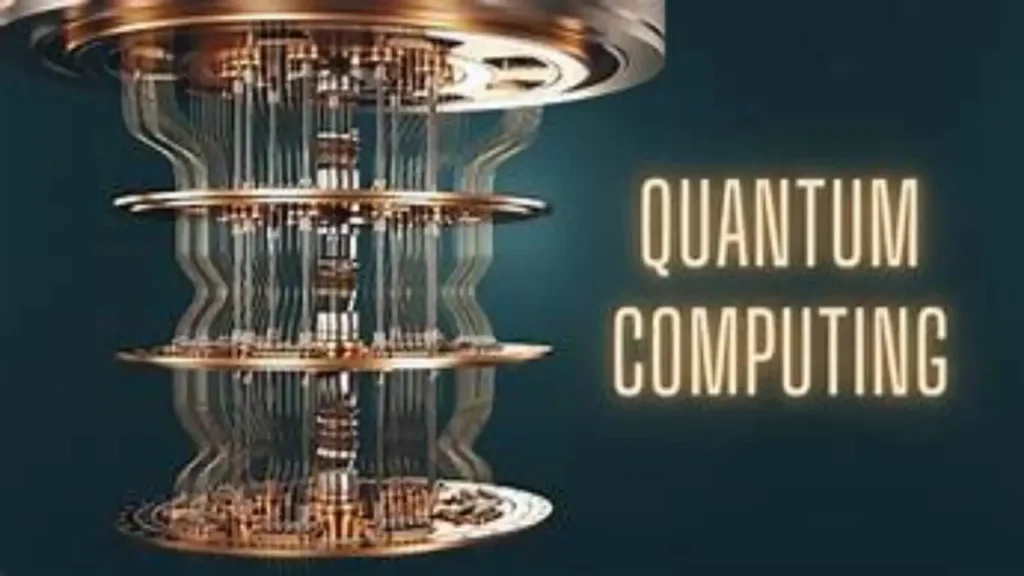
Developing quantum systems is complex and expensive. Qubits are highly sensitive to environmental changes, which can cause errors.
There is also a lack of skilled professionals and infrastructure. Additionally, building stable and scalable quantum computers remains a major challenge.
These limitations mean that Quantum Computing is still in its early stages of development.
Future of Quantum Computing
The future of Quantum technology looks promising. Major technology companies and research institutions are investing heavily in this field.
As advancements continue, Quantum technology is expected to become more practical and accessible. It may play a key role in solving global challenges such as climate change, medical research, and advanced data analysis.
In the coming years, Quantum technology could become a core part of technological innovation.
Conclusion
Quantum technology is a revolutionary technology that has the potential to transform the way we solve complex problems. By using the principles of quantum mechanics, it offers capabilities far beyond traditional computing.
While there are challenges to overcome, the progress in this field is significant. Learning the basics of Quantum technology is essential for understanding the future of technology.
As innovation continues, Quantum technology will play a major role in shaping the digital world.
FAQs
1. What is Quantum Computing?
Quantum technology is a type of computing that uses qubits and quantum mechanics to process information more efficiently than traditional systems.
2. How is Quantum Computing different from classical computing?
Quantum technology uses qubits that can exist in multiple states, allowing it to perform many calculations at once.
3. What are qubits?
Qubits are the fundamental units of Quantum technology that can represent both 0 and 1 simultaneously.
4. What are the main uses of Quantum Computing?
It is used in healthcare, finance, cybersecurity, logistics, and artificial intelligence.
5. Is Quantum technology available today?
Yes, but it is mostly limited to research and specialized use cases.
6. What are the challenges of Quantum Computing?
Challenges include high costs, technical complexity, and sensitivity to environmental conditions.
7. What is the future of Quantum Computing?
Quantum technology is expected to grow rapidly and become a key technology in solving complex global problems.
Also Read :AI Cybersecurity and Zero Trust
Comment on “Quantum Computing: A Beginner’s Guide to the Future of Advanced Technology”