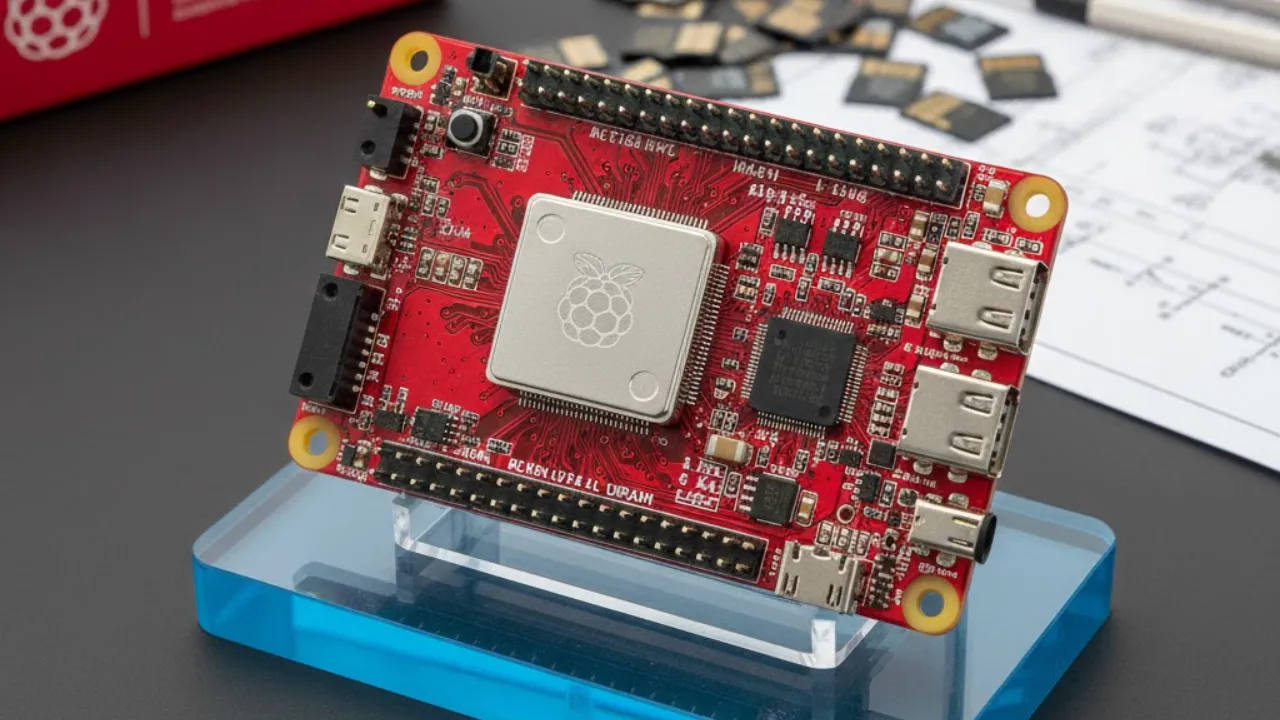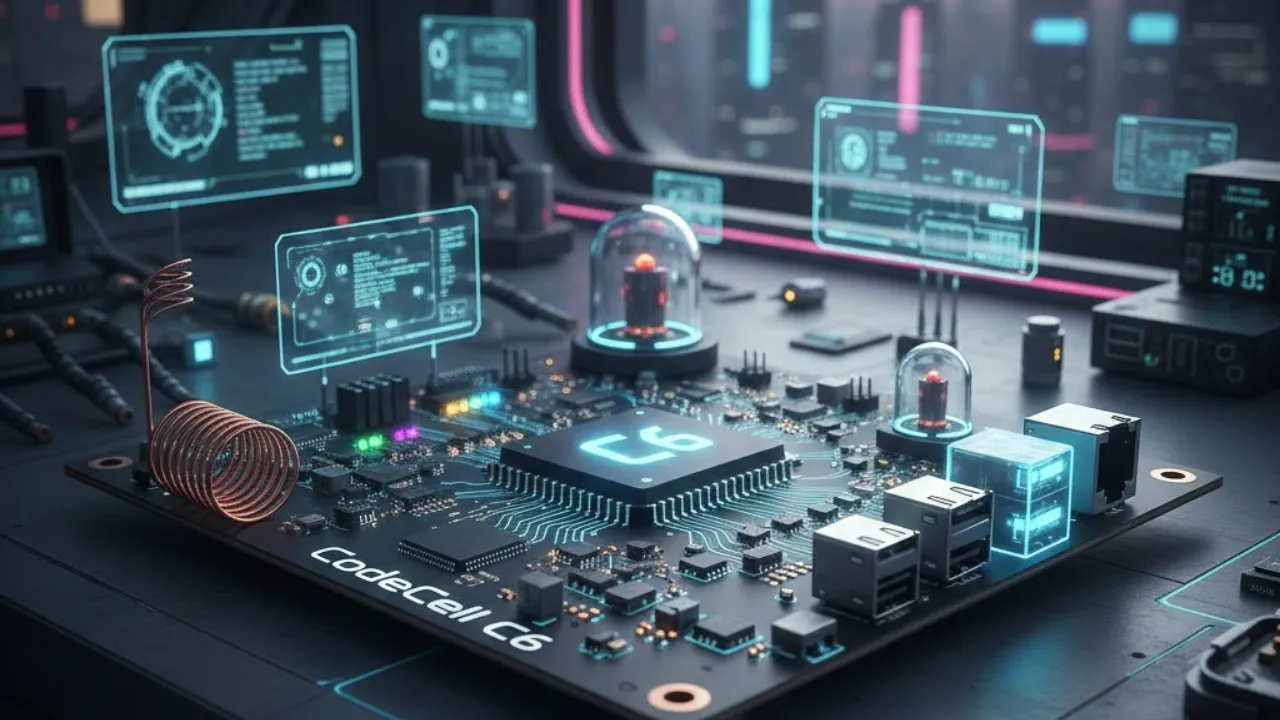
What if the IoT development board that many creators have been waiting for has finally arrived? According to a breakdown by microbots, the new CodeCell C6 aims to push ESP32-based development forward with better power efficiency, more memory, and modern connectivity — without increasing the price. Built for both developers and hobbyists, the compact board targets smart home automation, sensor networks, and long-running battery projects that demand reliability.
The CodeCell C6 isn’t just a small refresh. It’s designed as a response to real user needs: longer battery life, easier integration, and flexible hardware that adapts to different projects. With Wi-Fi 6, Bluetooth 5, and Zigbee support packed into a penny-sized board, it promises serious capability in a tiny footprint.
CodeCell C6 Overview: Key Highlights
Priced at €29.99, the board runs on the ESP32 platform and includes 8 MB of flash memory, doubling storage compared to earlier versions. Its low-power architecture and dynamic wake-up system allow it to sleep efficiently while still reacting instantly to sensor triggers. That balance makes it ideal for IoT setups that need to run for months on battery.
Wireless support is one of its biggest strengths. The board includes Wi-Fi 6 for faster and more stable connections, Bluetooth 5 for short-range communication, and Zigbee compatibility for smart home ecosystems. Integration with platforms like Home Assistant is built in, making it easier to plug into existing automation setups.
Hardware Built for Flexibility
The C6’s hardware design focuses on adaptability. It includes six configurable GPIO pins, all capable of PWM output, with three doubling as analog inputs. I²C pins are placed on the underside for clean sensor connections, and a built-in charging circuit supports LiPo batteries for portable projects.
These features make the board suitable for everything from environmental monitoring to motor control and robotics. Developers can prototype quickly without adding extra power modules or complicated wiring.
Software Support That Speeds Up Development
The board works directly with the Arduino IDE, giving users a familiar programming environment. It also integrates with the MicroLink app, which lets developers control connected modules from a phone or computer. Extensive tutorials and ready-made examples reduce the learning curve, making the C6 approachable even for beginners.
USB connectivity ensures fast setup and flashing, so projects can move from idea to testing with minimal friction.
Accessories Included Out of the Box
CodeCell ships the C6 with useful extras: a USB cable, pin headers, mounting screws, and an optional LiPo battery. These additions mean users can begin building immediately without hunting for missing parts.
Why the CodeCell C6 Stands Out
The CodeCell C6 combines expanded memory, strong low-power performance, and next-gen wireless features in a board that remains affordable. For creators building smart devices, sensor nodes, or automation systems, it offers a rare mix of power and simplicity. Whether you’re a seasoned IoT developer or just starting out, the C6 positions itself as a flexible foundation for ambitious projects — without the usual complexity.
Also Read
Google’s Secret Gemini 3 Pro Leak: 5 Hidden AI Models, One Already Pulled
Samsung Galaxy S26 Ultra Leak: Privacy Screen, New Design & Camera Upgrades Revealed
Apple Is Killing the Notch: M6 OLED MacBook Pro Leak Changes Everything