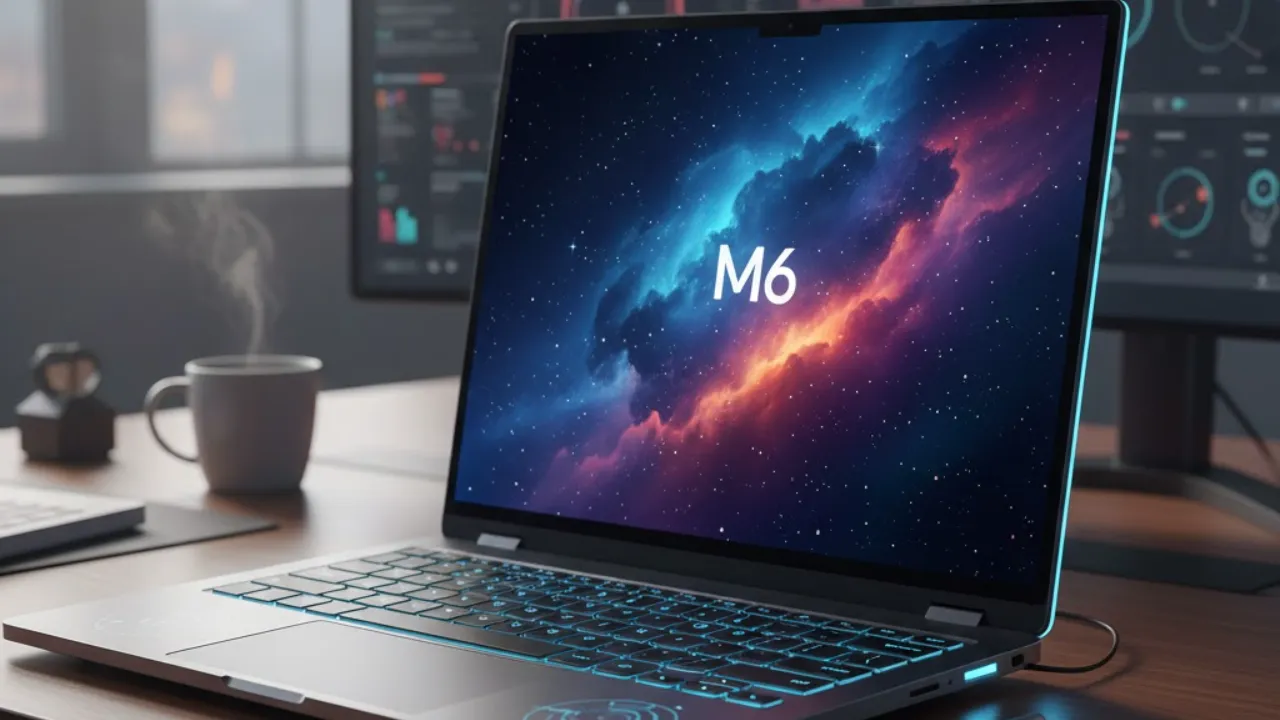
Apple is reportedly working on its biggest MacBook Pro redesign since 2021 — and the notch may finally be gone. According to new reports, the next-generation MacBook Pro models will introduce OLED displays, touchscreen support, M6 Pro and M6 Max chips, and possibly even cellular connectivity. Expected to launch between late 2026 and early 2027, the overhaul could redefine what a professional laptop looks and feels like.
A recent video from Matt Talks Tech highlights how these changes could mark a turning point for Apple’s laptop lineup, especially for creative professionals and power users.
OLED Displays Could Transform the MacBook Pro
For the first time, Apple is expected to bring OLED technology to the MacBook Pro. OLED panels deliver deeper blacks, richer colors, and dramatically higher contrast compared to traditional LCD displays. For video editors, photographers, and designers, this means better color accuracy and sharper visuals.
The display is also rumored to support ProMotion with adaptive refresh rates from 1Hz to 120Hz. That means smoother scrolling, fluid animation, and better battery efficiency because the screen adjusts based on what you’re doing. Whether editing 4K footage or watching content, the upgrade promises a more immersive experience.
Touchscreen Support Is Finally Coming
After years of speculation, Apple may add touchscreen functionality to the MacBook Pro alongside macOS 27. The software is expected to include features designed specifically for touch interaction, bringing MacBooks closer to iPad-style usability without replacing the keyboard and trackpad workflow.
For artists, editors, and creators using drawing or photo tools, touch input could open new ways to work. It’s a major shift in Apple’s philosophy, blending productivity with flexibility.
Dynamic Island May Replace the Notch
Reports suggest Apple will replace the MacBook notch with a Dynamic Island-style interface, similar to newer iPhones. This interactive area could display alerts, background tasks, and notifications without disrupting work.
Face ID is unlikely for now, but Touch ID is expected to remain. The change focuses on making the interface cleaner and more functional while removing one of the most criticized design elements of recent MacBooks.
M6 Chips Promise Massive Performance Gains
The new machines will reportedly run on M6 Pro and M6 Max chips, built using an advanced 2nm process. These chips are expected to bring major gains in speed and efficiency, enabling faster workflows, longer battery life, and smoother multitasking.
Improved efficiency could also allow Apple to design a thinner chassis and upgraded cooling system. Even during heavy workloads like video rendering or 3D design, the laptop is expected to stay cool and stable.
Built-In Cellular Connectivity Could Debut
For the first time, Apple may add optional cellular connectivity to the MacBook Pro. Powered by a dedicated modem chip, the feature would support 5G, 4G, and eSIM, letting users stay online without Wi-Fi.
For remote workers and frequent travelers, always-on connectivity could be a game-changer.
Thinner Design Without Sacrificing Power
The redesigned MacBook Pro is expected to be slimmer while maintaining the performance professionals expect. Enhanced cooling systems would manage heat from the M6 chips, ensuring consistent performance in demanding tasks.
It won’t be as thin as the MacBook Air, but it aims to balance portability with power.
Release Date and Pricing Expectations
Apple is targeting late 2026 or early 2027 for the launch. With OLED screens, touch support, and new chips, prices may rise compared to current models. However, for professionals who rely on their machines daily, the upgrades could justify the premium.
If these leaks are accurate, Apple isn’t just refreshing the MacBook Pro — it’s reinventing it.
Also Read
Bitmo Lab MeetSticker Review: The Paper-Thin Tracker for “Untrackable” Gear
Samsung’s OneUI 8.5 Is Coming — And It Could Change How You Use Your Galaxy Forever
MSI Claw A8 vs 8i+ — Same Screen, Totally Different Beasts Under the Hood