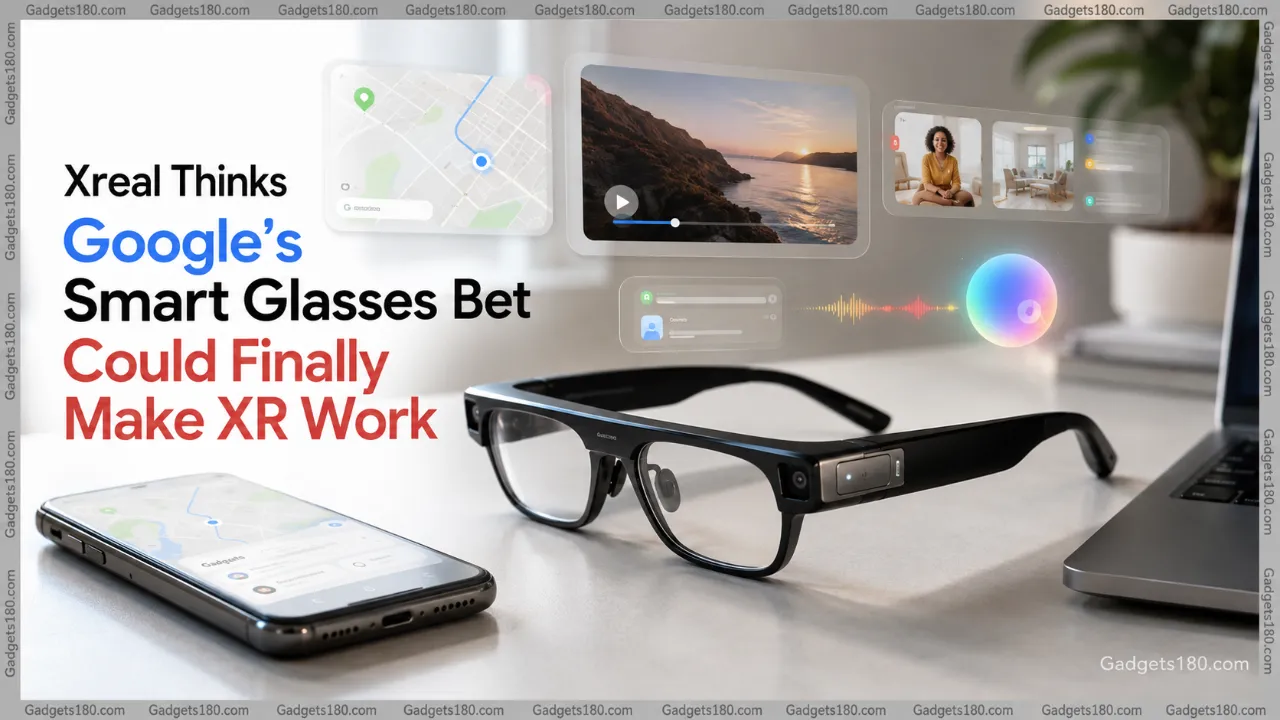
Xreal believes the smart glasses industry may finally be ready for its mainstream moment. After years of bulky headsets, awkward designs, weak software ecosystems, and consumer hesitation, the company is betting that its new partnership with Google can solve some of the biggest problems that have held the category back.
The company is working with Google and Qualcomm on Project Aura, a pair of Android XR-powered smart glasses expected to launch globally in 2026. Xreal says the goal is to make extended reality feel lighter, more practical, and more useful for everyday users, not just early adopters or developers.
What Is Xreal’s Project Aura?
Project Aura is a new pair of wired XR smart glasses created by Xreal in partnership with Google and Qualcomm. The glasses were shown at Google I/O 2026 and are built around Android XR, Google’s operating system for extended reality devices.
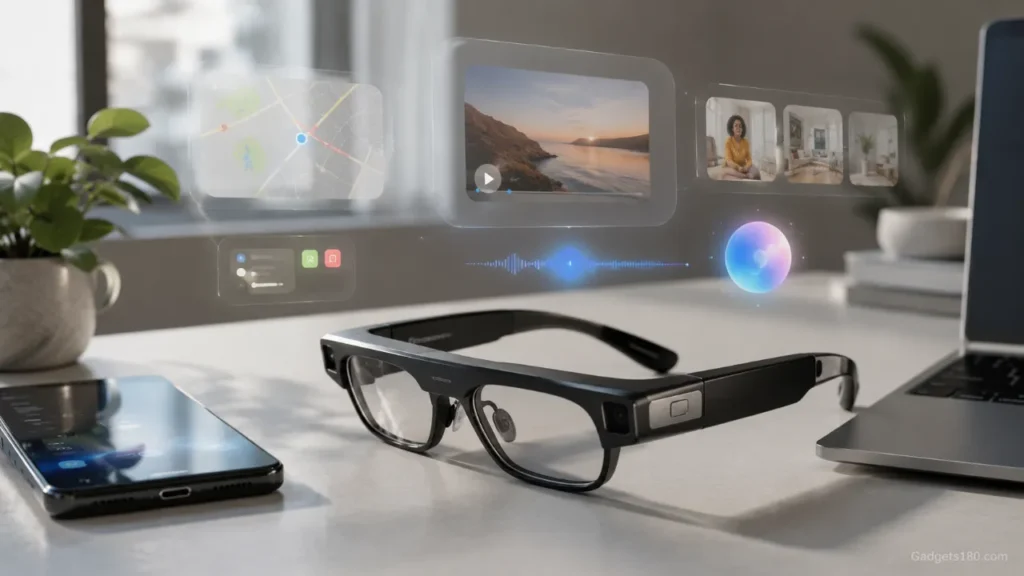
Unlike basic audio-only AI glasses, Project Aura includes displays, cameras, speakers, hand tracking, and immersive app support. Reports from Google I/O describe the device as a lightweight XR product that can handle 2D Android apps, spatial experiences, immersive YouTube content, Google Maps demos, and Gemini-powered features.
Why Smart Glasses Have Been So Hard to Get Right
Smart glasses sound simple, but the industry has struggled with them for years.
The product has to be light enough to wear, powerful enough to be useful, stylish enough for normal people, and affordable enough to sell at scale. That is a difficult balance.
Many earlier devices failed because they were too bulky, too expensive, too limited, or too strange-looking for daily use. Some had decent hardware but weak apps. Others had interesting software but uncomfortable designs.
Xreal’s argument is that the industry now has better ingredients: stronger chips, better displays, improved spatial software, AI assistants, and a serious platform partner in Google.
Google’s Android XR Could Be the Missing Piece
One of the biggest advantages for Xreal is Android XR.
A hardware company can build good glasses, but without a strong software platform, users may not have enough reasons to wear them. Android XR gives developers a familiar ecosystem and gives users access to Android apps, spatial experiences, and Google services.
Google has also been building Gemini deeper into its XR plans. That matters because AI could make smart glasses more useful in real life. Instead of only showing a floating screen, glasses could help users navigate, translate, search, summarize, identify objects, or interact with digital content hands-free.
What Makes Project Aura Different?
Project Aura appears to be designed as a middle ground between full VR headsets and simple smart glasses.
It is not as bulky as a headset like Meta Quest or Apple Vision Pro, but it is more capable than camera-and-audio glasses like Ray-Ban Meta. Android Central reported that the device uses a separate compute puck, which helps keep the glasses lighter by moving key processing and battery components away from the frames.
That design could make the glasses more comfortable while still allowing stronger XR performance.
Also read;
iPhone 18 Pro Rumors 2026- Design, Colors, Camera, Chip and Release Date
Why Is Google AI Overview Wrong Today? Search Bug Explained
How to Use Google’s New AI Agents to Go Beyond Your Standard Searches
Display and Experience
Project Aura reportedly offers a 70-degree field of view, which is much wider than many current smart glasses, though still narrower than full VR headsets. The device also supports Android XR apps, hand tracking, and immersive content.
That wider field of view matters because it can make virtual screens and spatial apps feel more natural. For productivity, gaming, videos, and navigation, a larger visual area can make the experience feel less cramped.
Why Xreal Could Have an Advantage
Xreal already has experience selling display-based smart glasses. Its earlier products focused on giving users a large virtual screen for phones, laptops, gaming handhelds, and entertainment.
That gives the company a practical starting point. Instead of trying to invent a completely new behavior, Xreal is building on something people already understand: wearing glasses to see a bigger digital screen.
With Google and Qualcomm involved, Xreal may now have stronger software and chip support than it had before.
The Challenge: Mainstream Users Still Need a Reason to Care
Even with better hardware, smart glasses still face a big question: why should regular people buy them?
For gamers, travelers, developers, and tech fans, the answer may be easier. They may want a portable big screen, immersive apps, or hands-free AI.
But for mainstream users, the product needs to feel useful every day. It cannot just be cool. It has to solve real problems.
That means Project Aura will need strong use cases like:
- Watching videos on a private virtual screen
- Using multiple work screens anywhere
- Getting navigation help
- Running Android apps in space
- Using Gemini hands-free
- Playing immersive games
- Translating or understanding the real world
- Viewing 3D or spatial content
How This Compares With Meta and Apple
The smart glasses market is becoming more competitive.
Meta has found early traction with Ray-Ban Meta glasses, which focus on cameras, speakers, microphones, and AI without a built-in display. Apple, meanwhile, has focused on high-end spatial computing with Vision Pro, though that device is much larger and more expensive than glasses.
Xreal and Google are taking a different path. Project Aura seems aimed at lightweight XR with actual displays, but without the full size of a headset.
That could put it in an interesting position between simple AI glasses and premium mixed-reality headsets.
Why 2026 Could Be a Big Year for Smart Glasses
Google has been increasing its focus on wearable AI and XR. At Google I/O 2026, the company showed smart glasses efforts with partners and highlighted Android XR as a key part of its future platform strategy.
Xreal also confirmed that Project Aura is expected to ship globally in 2026.
If the device delivers a comfortable fit, strong app support, reliable AI features, and a reasonable price, it could help smart glasses move closer to mainstream adoption.
What Could Still Go Wrong?
The biggest risks are the same ones that have hurt smart glasses before.
Battery life could be limited. The compute puck may feel inconvenient. The display may not be bright enough outdoors. The price may be too high. Developers may not build enough useful apps. And many people may still prefer phones, laptops, or regular earbuds for daily tasks.
Smart glasses are a difficult category because they ask users to change how they interact with technology. That kind of shift usually takes time.
Conclusion
Xreal believes it has finally found the right formula for smart glasses: lightweight XR hardware, Google’s Android XR platform, Qualcomm chips, and Gemini-powered AI experiences.
Project Aura may not instantly replace smartphones or laptops, but it could be an important step toward making smart glasses more practical. If Xreal and Google can solve comfort, software, pricing, and real-world usefulness, 2026 could become a turning point for the category.
For now, the smart glasses industry is still difficult. But Xreal’s partnership with Google gives it one of the strongest chances yet to make XR feel ready for everyday users.
FAQ
What is Project Aura?
Project Aura is a pair of Android XR-powered smart glasses developed by Xreal in partnership with Google and Qualcomm.
When will Project Aura launch?
Xreal and Google say Project Aura is expected to launch globally in 2026.
Is Project Aura a VR headset or smart glasses?
Project Aura is closer to XR smart glasses. It is lighter than a traditional VR headset but more capable than basic audio-only smart glasses.
Does Project Aura use Gemini AI?
Yes, Project Aura is part of Google’s Android XR ecosystem, which includes Gemini-powered AI features.
What can Xreal’s smart glasses do?
They are expected to support Android apps, spatial experiences, immersive video, hand tracking, Google services, and AI-powered interactions.
Why is Google partnering with Xreal?
Google is working with Xreal to help bring Android XR into lighter, more practical smart glasses hardware.
How is Project Aura different from Ray-Ban Meta glasses?
Ray-Ban Meta glasses focus mainly on camera, audio, and AI features without built-in displays. Project Aura includes XR displays for visual experiences.
Will Project Aura replace smartphones?
Not immediately. It may work more like a companion device for entertainment, productivity, AI assistance, and spatial apps.
Why have smart glasses struggled before?
Smart glasses have struggled because of bulky designs, weak battery life, limited apps, high prices, privacy concerns, and unclear everyday use cases.
